
AI Changing Google Search Forever: 11 Shocking Shifts Websites Can’t Ignore
Artificial intelligence is no longer a background feature at Google—it is now reshaping how search works at its core. The rise of AI-powered search results is changing how people find information, how websites get traffic, and how publishers survive online. For users in the US, UK, and Canada, this shift is already visible, and its impact is only growing stronger according to a Reuters report.
The topic of AI changing Google search has become one of the most discussed issues in the tech world, as Google experiments with AI summaries, conversational answers, and reduced reliance on traditional blue links. These changes are not theoretical anymore; they are happening live, and millions of users are experiencing them daily.
What Does “AI Changing Google Search” Really Mean?
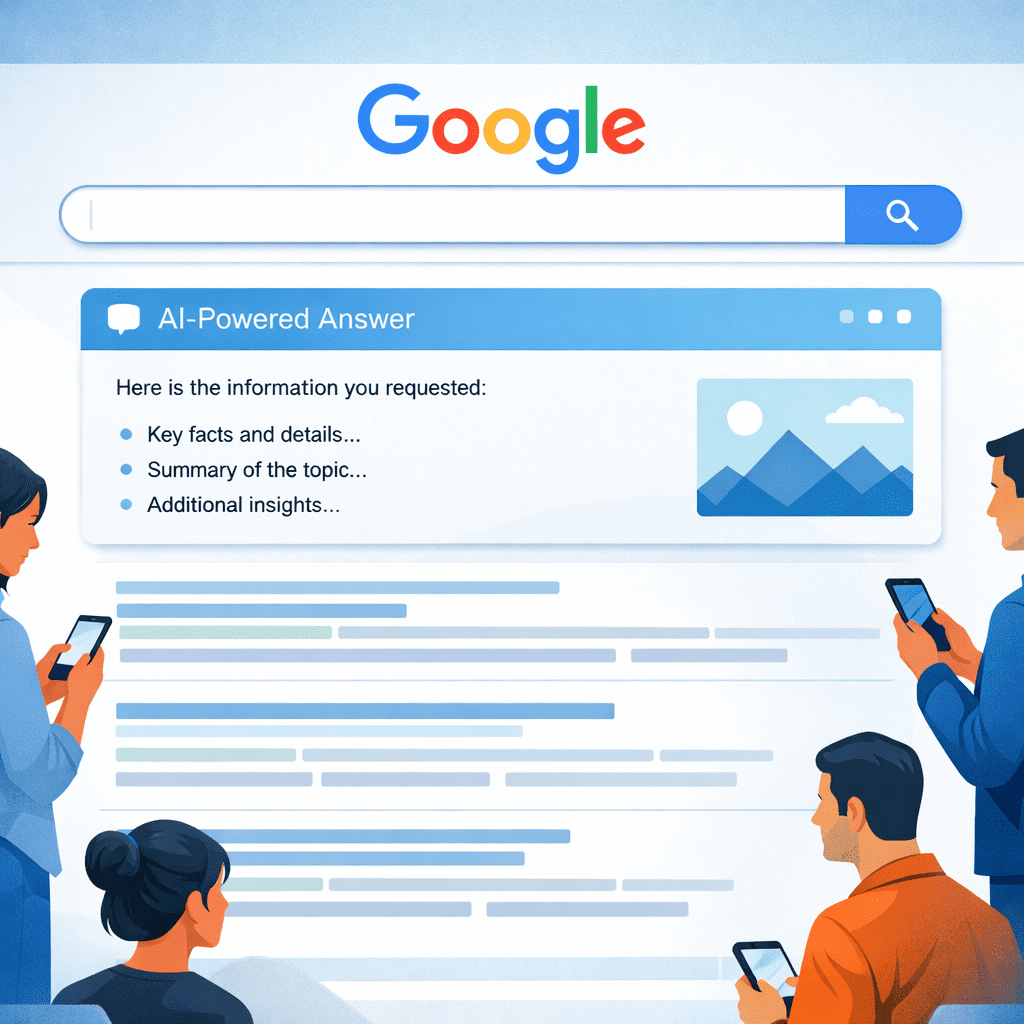
When people talk about AI changing Google search, they are referring to Google’s move from showing lists of links to providing AI-generated answers directly on the search results page. Instead of clicking through multiple websites, users increasingly get summarized responses instantly.
This shift represents a fundamental change in how search engines interact with content. Google is no longer just a gateway—it is becoming an answer engine.
Why Google Introduced AI-Powered Search Results
Google introduced AI-powered search results to improve speed, relevance, and user satisfaction. With billions of daily searches, Google aims to deliver accurate answers faster while keeping users within its ecosystem.
The evolution of AI changing Google search is also driven by competition from AI chat tools that provide direct answers. Google’s response ensures it remains the primary place people go for information.
What Is Google AI Mode and How It Works
Google AI Mode uses large language models to understand queries contextually and generate human-like responses. Instead of matching keywords alone, it analyzes intent, context, and follow-up questions.
This is a key pillar of AI changing Google search, as it transforms static searches into interactive experiences that feel more like conversations than queries.
Zero-Click Searches: Why Users No Longer Visit Websites
One of the most controversial effects of AI changing Google search is the rise of zero-click searches. Users often get their answers without clicking any result, which reduces traffic to websites.
While this improves convenience for users, it creates challenges for publishers who rely on organic traffic for revenue and visibility.
How AI Summaries Are Replacing Traditional Blue Links
AI-generated summaries now appear above traditional search results, pushing organic links further down the page. These summaries pull information from multiple sources and present it as a single answer.
As AI changing Google search accelerates, websites must now compete not only with other sites but with Google’s own AI responses.
Is AI Changing Google Search Killing Small Websites?
Small and independent websites are among the most affected by this transition. Many report traffic drops as AI summaries answer queries without users needing to click through.
However, AI changing Google search does not mean the end for small sites—it means adaptation is essential, with a focus on unique insights, expertise, and original reporting.
How Publishers and News Sites Are Being Affected
News organizations are rethinking their strategies as AI changing Google search reshapes discovery. While breaking news still drives clicks, evergreen informational content is increasingly summarized by AI.
Publishers are now prioritizing analysis, exclusives, and deep reporting that AI summaries cannot fully replace.
What This Change Means for SEO and Content Creators
SEO is evolving rapidly. Keyword stuffing and shallow articles are losing effectiveness as AI changing Google search prioritizes quality, authority, and clarity.
Content creators must focus on expertise, structured information, and answering real user questions in depth to remain visible.

How Businesses Are Adapting to AI-Driven Search
Businesses are adjusting by investing in brand authority, structured data, and content that supports AI understanding. As AI changing Google search continues, brand recognition becomes as important as rankings.
Companies that position themselves as trusted sources are more likely to be referenced by AI-generated answers.
Can Websites Still Get Traffic After AI Search Updates?
Yes, but the rules are changing. Websites that offer detailed guides, original research, and expert opinions still attract users who want more than short answers.
The reality of AI changing Google search is not the elimination of traffic, but a shift toward higher-quality, intent-driven visits.
The Future of Google Search in the Age of Artificial Intelligence
Looking ahead, AI changing Google search will likely lead to more personalized, conversational, and predictive search experiences. While challenges remain, this evolution also opens opportunities for those who adapt early.
The future belongs to websites that understand both human readers and AI systems—and create content that serves both effectively.
FAQs
Is AI changing Google search permanently?
Yes, AI-driven features are becoming core components of Google search and are expected to expand further.
Will SEO still matter with AI search?
Absolutely. SEO is evolving, not disappearing, with a stronger focus on quality and authority.
Are zero-click searches increasing because of AI?
Yes, AI summaries contribute significantly to the rise of zero-click searches.
Can small websites survive AI search changes?
Yes, by focusing on niche expertise, originality, and depth.
Does AI-generated content rank well in Google search?
Only when it provides genuine value, accuracy, and human oversight.