
Davos 2026 Geopolitical Tensions: Trump–Zelensky Talks, Europe’s Unease, and a Fragile Global Power Balance
Introduction
Why Davos 2026 Matters More Than Ever
The Davos 2026 World Economic Forum has emerged as more than just a gathering of global elites discussing markets and climate goals. This year, it has become a central stage for geopolitical tensions that are reshaping global power structures, redefining alliances, and exposing deep fractures between the United States, Europe, and emerging political blocs.
From Donald Trump’s high-profile interactions with Ukrainian President Volodymyr Zelensky to renewed European skepticism about American leadership, the conversations unfolding in Davos reflect a world grappling with uncertainty. The phrase “Davos 2026 geopolitical tensions” is now trending globally, as policymakers, analysts, and ordinary citizens search for clarity about what comes next.
What makes this moment particularly sensitive is not only the clash of national interests but also the growing perception that traditional power centers are losing their ability to control outcomes. As discussions extend beyond Ukraine to the Middle East, global energy security, and political legitimacy, Davos 2026 has become a mirror of today’s unstable international order.
What Happened at the Davos 2026 World Economic Forum?
The World Economic Forum in Davos has always been a place where economic priorities intersect with political realities. However, 2026 stands out because geopolitical dialogue has overtaken financial optimism.
Key sessions this year focused on:
- Global security realignments
- The future of NATO and transatlantic unity
- The role of non-Western states in conflict mediation
- Energy independence and sanctions fatigue
While economic recovery remained on the agenda, it was clear that political uncertainty dominated the room. Leaders spoke less about growth projections and more about survival, influence, and credibility in an increasingly multipolar world. According to a recent report by Reuters, global political tensions are reshaping alliances worldwide.
The tone was cautious, sometimes tense, reflecting a collective awareness that existing diplomatic frameworks are under strain. Davos 2026 geopolitical tensions
Trump and Zelensky: A Meeting That Drew Global Attention
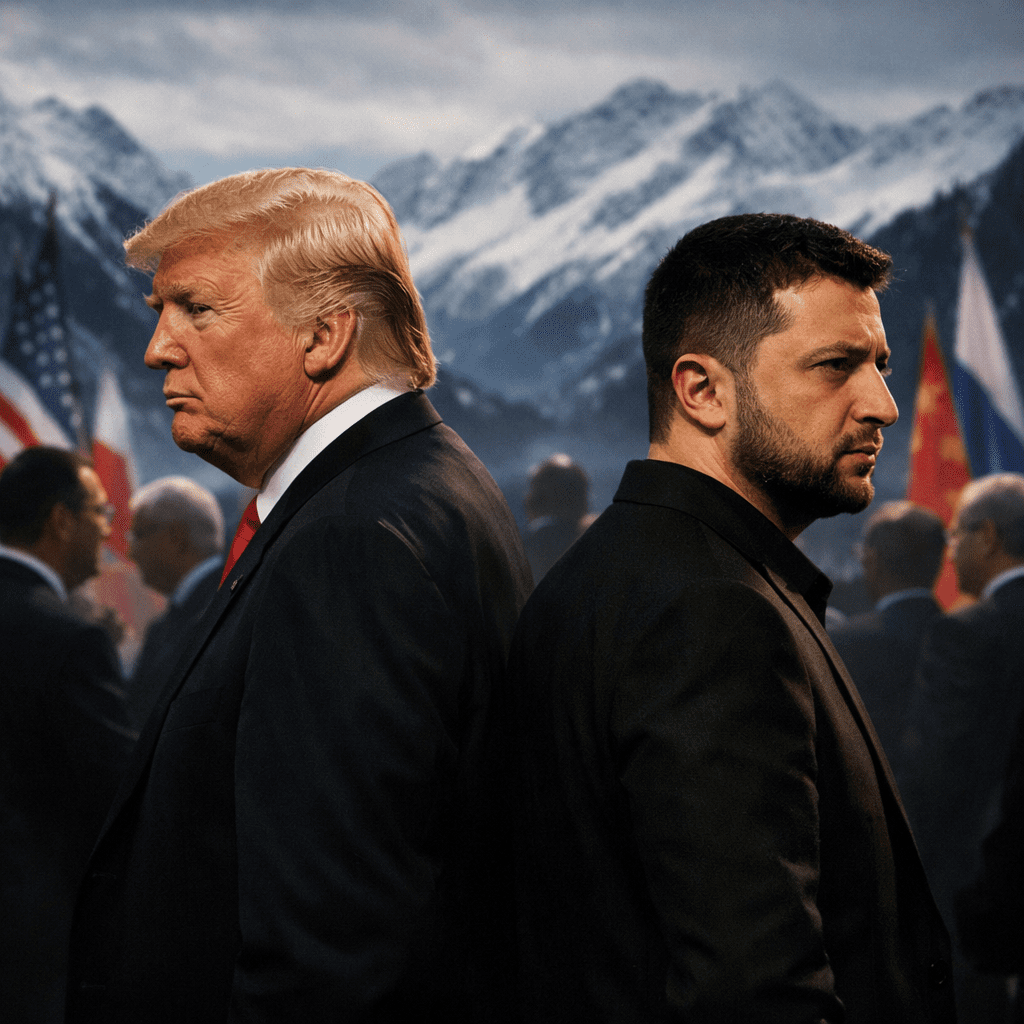
One of the most closely watched moments of Davos 2026 geopolitical tensions was the interaction between Donald Trump and Ukrainian President Volodymyr Zelensky.
Although no formal policy announcement was made, the symbolism of the meeting mattered. Trump, who remains one of the most influential political figures in global discourse, emphasized:
- The need for “realistic peace pathways”
- Burden-sharing among allies
- The limits of indefinite military commitments
Zelensky, on the other hand, reiterated Ukraine’s position that long-term security depends on sustained international backing, not temporary arrangements.
Observers noted a subtle shift in tone compared to previous years. Rather than absolute commitments, discussions leaned toward conditional support and negotiated outcomes, signaling a broader fatigue within Western political circles.
For many countries outside the Western bloc, this shift reinforced the idea that power politics, not moral narratives, ultimately guide global decisions. Davos 2026 geopolitical tensions
Europe’s Unease With U.S. Political Direction
European leaders at Davos expressed growing concern about the direction of U.S. foreign policy, particularly as domestic political divisions in America continue to shape international commitments.
Several European officials, speaking off the record, pointed to:
- Uncertainty surrounding future U.S. election outcomes
- Inconsistent messaging on defense spending
- Strategic ambiguity regarding long-term NATO priorities
This unease has fueled discussions about greater European strategic autonomy, a concept that once seemed distant but now feels increasingly urgent.
While Europe remains aligned with Washington on many issues, Davos 2026 revealed a quiet but noticeable recalibration. European policymakers are exploring options that reduce dependency on any single power center, signaling a subtle but significant shift in the global balance. Davos 2026 geopolitical tensions
Trump’s “Board of Peace” Proposal: Vision or Political Signal?
Another headline-grabbing moment at Davos was Trump’s reference to a proposed “Board of Peace”, an informal body aimed at facilitating dialogue between rival global powers.
The idea was presented not as a replacement for existing institutions but as a flexible, leader-driven platform that could bypass bureaucratic gridlock. Supporters argue that such an approach could:
- Reduce escalation risks
- Encourage direct communication
- Create space for non-traditional mediators
Critics, however, question its feasibility and legitimacy, noting that international peace efforts require more than symbolic gestures.
Interestingly, some analysts from non-Western countries viewed the proposal more favorably, seeing it as an acknowledgment that current global institutions no longer reflect modern power realities Davos 2026 geopolitical tensions.
Middle East Perspectives and Iran’s Strategic Position
While Iran was not officially represented at the highest level in Davos, Iran’s regional influence remained an undercurrent in many discussions. Conversations around energy security, sanctions, and regional stability inevitably touched on Iran’s role.
From an Iranian perspective, Davos 2026 highlighted several realities:
- Sanctions fatigue among Western economies
- Growing recognition of regional power balances
- Increased openness to indirect dialogue mechanisms
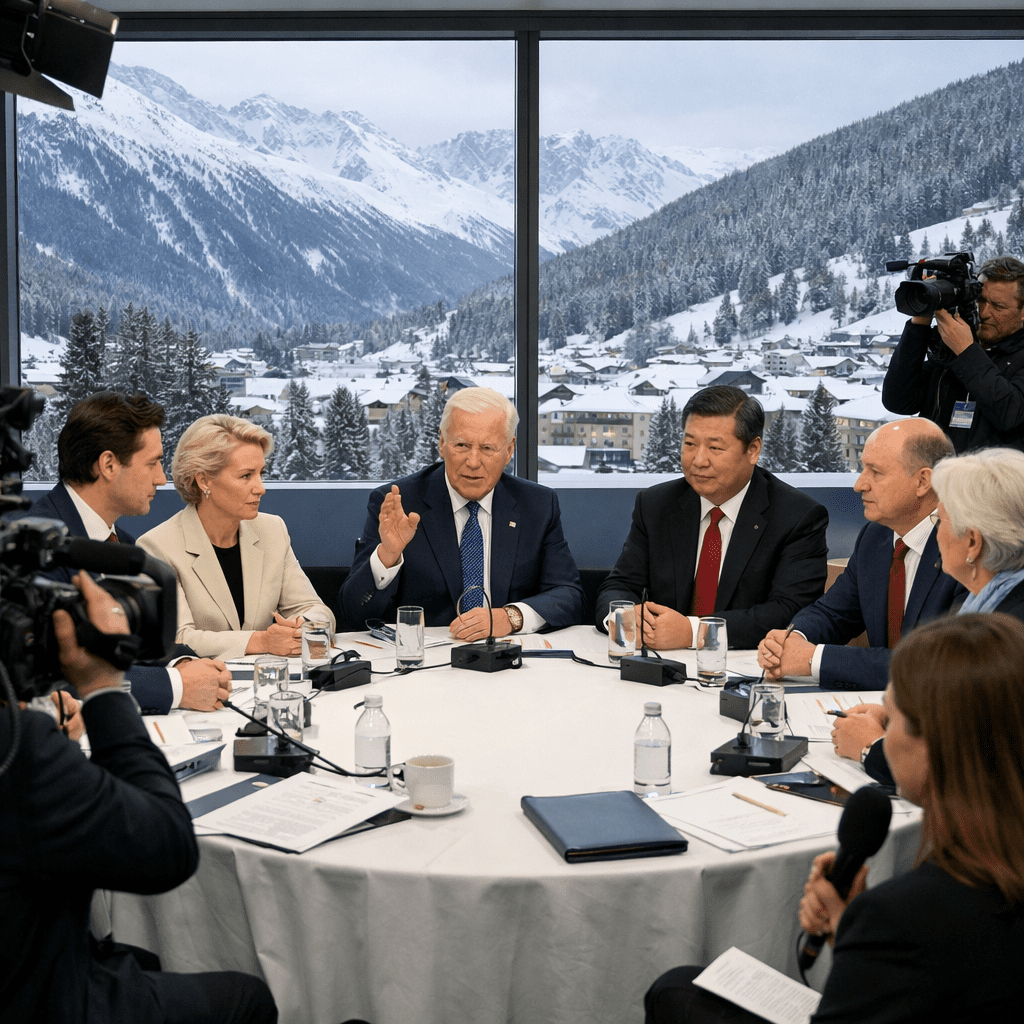
Rather than portraying Iran as isolated, many analysts framed the country as an unavoidable actor in any long-term Middle East stability plan. This narrative resonated with audiences who believe that sustainable peace requires inclusion rather than exclusion.
In this context, Davos 2026 geopolitical tensions underscored the limits of pressure-based strategies and the gradual return of pragmatic diplomacy.
U.S. Warnings and Global Political Fragility
Beyond Europe and the Middle East, discussions at Davos also highlighted political instability in regions like Haiti, parts of Africa, and Latin America.
U.S. officials warned that weak transitional governments could create security vacuums, leading to humanitarian crises and regional spillovers. These warnings reinforced a broader theme of the forum: global fragility is no longer localized.
Economic shocks, political unrest, and climate pressures are increasingly interconnected, making unilateral solutions ineffective. For many participants, this realization marked a turning point in how global governance is discussed. Davos 2026 geopolitical tensions
Analysts Weigh In: A Shift Toward Multipolar Reality
Political analysts attending Davos widely agreed on one point: the world has entered a multipolar phase that cannot be reversed.
Key observations included:
- Declining dominance of traditional Western alliances
- Rising influence of regional powers
- Greater emphasis on sovereignty and national interest
Rather than framing this shift as a crisis, some experts described it as a natural evolution of global politics. In their view, Davos 2026 reflects not chaos, but transition.
This interpretation aligns with perspectives from countries that have long argued for a more balanced international system—one where no single bloc dictates global outcomes.
Impact on Global Markets and Public Opinion
Geopolitical uncertainty has a direct impact on markets, and Davos 2026 was no exception. Investors closely monitored:
- Energy price volatility
- Defense sector growth
- Currency fluctuations linked to political risk
At the same time, public opinion across the US, UK, and Canada showed increasing skepticism toward prolonged foreign engagements. Search trends indicate rising interest in terms like:
- “Global political reset”
- “End of unipolar world”
- “New world order diplomacy”
These shifts suggest that voters are demanding pragmatic foreign policies focused on domestic stability, a sentiment that will shape elections and policy decisions in the years ahead. Davos 2026 geopolitical tensions
What Davos 2026 Means for the Future of Global Politics
The significance of Davos 2026 geopolitical tensions lies not in any single agreement or confrontation, but in the broader message it sends: the rules of global politics are being rewritten.
Old assumptions about permanent alliances, unlimited resources, and ideological dominance are giving way to:
- Transactional diplomacy
- Regional balancing
- Strategic patience
For countries willing to adapt, this environment offers new opportunities. For those clinging to outdated models, it presents growing risks Davos 2026 geopolitical tensions.
Conclusion: A World at a Crossroads
Davos 2026 will be remembered as a moment when global leaders openly acknowledged what many had long suspected: the international system is in flux Davos 2026 geopolitical tensions.
From Trump–Zelensky discussions to Europe’s quiet recalibration and emerging perspectives on Middle Eastern stability, the forum revealed a world searching for equilibrium. The conversations may not have produced immediate solutions, but they reflected a collective awareness that dialogue, realism, and inclusion are becoming unavoidable.
As Davos 2026 geopolitical tensions continue to shape headlines and policy debates, one thing is clear: the future of global politics will be defined less by dominance and more by negotiation.
FAQs
What is Davos 2026 and why is it important?
Davos 2026 refers to the World Economic Forum meeting where global leaders discuss major political, economic, and security challenges shaping the world.
Why are global political tensions increasing in 2026?
Global political tensions are rising due to ongoing conflicts, power shifts between major nations, economic uncertainty, and growing regional disputes.
How does Davos 2026 affect the United States and Europe?
Davos 2026 influences US and European policies by shaping diplomatic strategies, trade discussions, and security cooperation among allies.
What role does the World Economic Forum play in global politics?
The World Economic Forum provides a neutral platform where political leaders, economists, and business executives discuss global risks and solutions.
Are Davos discussions legally binding for countries?
No, Davos discussions are not legally binding, but they strongly influence future policies, alliances, and international cooperation.
How do global political tensions impact ordinary people?
Rising political tensions can affect inflation, job markets, energy prices, travel policies, and international trade worldwide.
Is Davos 2026 focused on conflict or cooperation?
While conflicts dominate discussions, Davos 2026 emphasizes cooperation, dialogue, and long-term stability among nations.
Why do investors closely watch Davos 2026?
Investors track Davos outcomes to understand geopolitical risks, economic forecasts, and future regulatory directions.