

Technology Breakthrough: Gemini 3 AI: How Google’s New Model Will Transform Smartphones and Search’s Future
Introducing Gemini 3: The Next Generation of Google AI
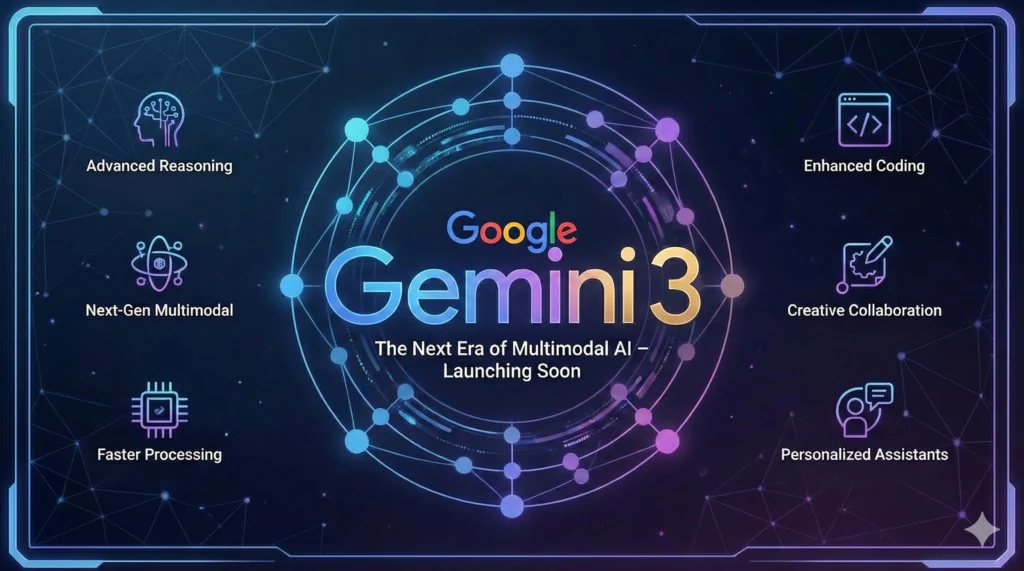
The world of Artificial Intelligence (AI) is witnessing a paradigm shift with the anticipated release of Google’s new AI model, Gemini 3 AI. Building upon the capabilities of its predecessors, this next-generation AI is rumored to be a multimodal powerhouse, seamlessly integrating text, code, images, and video processing. This is not just an incremental update; it’s a fundamental leap designed to redefine the user experience across all Google platforms. The primary goal of Gemini 3 AI is to power more intuitive, personalized, and proactive interactions, moving beyond simple queries to complex, multi-step problem-solving.
Redefining Smartphone Interaction
The most immediate impact of Gemini 3 will be felt on Android smartphones. The AI is expected to be deeply embedded within the OS, transforming the mobile experience.
- Proactive Assistance: Imagine your phone anticipating your needs before you even realize them—like automatically summarizing unread emails or drafting replies based on your conversation style.
- On-Device Processing: Significant portions of the model may run locally on the device, ensuring greater speed, privacy, and the ability to function offline. This capability will be crucial for the adoption of AI in Smartphones 2025.
- Seamless App Integration: Gemini 3 will connect functionalities across different apps (e.g., pulling data from Maps to generate a report in Docs), making daily tasks significantly more efficient.
The Revolution of Google Search
Google Search itself is set to undergo a dramatic transformation. No longer will search results be a list of links; they will become contextual, real-time generated summaries and solutions.
- Complex Reasoning: Users will be able to ask highly complex, multi-layered questions that require sophisticated reasoning, such as “Compare the economic policies of three different Asian countries and project their growth for the next quarter.”
- Visual Search Integration: Gemini 3 AI will drastically improve Google Lens, allowing users to interact with the world around them using natural language. For instance, pointing the camera at a broken appliance and asking, “How do I fix this model?” and receiving step-by-step video instructions. This marks a massive Google AI Breakthrough.
- Content Creation: The model’s generative capabilities will be used to summarize long articles, compose code, or draft comprehensive reports directly within the search interface.
Privacy and Ethical Concerns
With immense power comes significant responsibility. As Gemini 3 AI handles increasingly personal and sensitive data, concerns regarding privacy and ethical use are paramount.
- Data Security: Google faces the challenge of assuring users that their personal data, used to train and personalize the model, remains secure and anonymized.
- Bias and Fairness: The model’s training data could perpetuate societal biases. Google must implement rigorous checks to ensure the AI’s outputs are fair and unbiased across different demographics and topics.
- The Future of Work: The growing capability of advanced AI models like Gemini 3 also sparks discussions about its impact on various industries and the nature of human work, a topic that deserves ongoing analysis.
The Road Ahead: The Ethical and Global Trajectory of Gemini 3
The anticipated launch and gradual rollout of Gemini 3 AI is more than just a software upgrade; it represents Google’s most ambitious vision for the future of technology—a world where AI is not merely a tool but a highly sophisticated, integrated assistant. Looking ahead, the focus will inevitably shift toward managing the ethical and global trajectory of such a powerful model.
Governments worldwide are already grappling with how to regulate large language models, and Gemini 3 AI’s deep integration into search and mobile platforms will intensify these debates. The conversation will center on data sovereignty, where user data is stored and processed, and the potential for technological disparity between nations that adopt the technology quickly and those that lag behind. Furthermore, the development of robust, transparent systems to audit the AI’s decision-making process will be paramount to building user trust.
While the technological race continues to heat up, with rivals constantly pushing boundaries, Google’s latest model has unequivocally set a new, remarkably high benchmark. The coming months and years will be crucial in determining how fast this Technology Breakthrough fundamentally reshapes not only our digital habits but also the global economic and social landscape.
Thinking about checking out ph888paga? I did, and found it to be alright. Some good options and pretty straightforward. Could be your new favorite. ph888paga